
For years, the blockchain space was defined by tribalism. The question on everyone’s mind was, “Which chain will win?” Ethereum maximalists, Solana supporters, and Bitcoin loyalists debated endlessly about which protocol’s superior technology would eventually absorb all others. However, the reality of the 2020s suggests that the industry is pivoting away from this winner-take-all mentality.
We are firmly entrenched in a multi-chain era. Currently, there are nearly one hundred Layer-2 networks within the Ethereum ecosystem alone, not to mention independent Layer-1s like Solana and Bitcoin. This fragmentation creates a massive challenge: liquidity and users are scattered across isolated “value islands,” making the user experience clunky and dangerous.
This raises a critical question for the future of Web3: Will a single dominant blockchain eventually emerge to rule them all, or will the future be defined by a seamless, interconnected multi-chain network? The answer lies not in choosing a “winner,” but in how we solve the problem of interoperability.
The Case Against “One Chain to Rule Them All”
The concept of one monolithic blockchain dominating the entire industry is increasingly viewed as outdated. No single chain can optimize for every use case simultaneously.
- Specialization vs. Compromise: Blockchains inherently require trade-offs. A network optimized for high throughput (like Solana) often sacrifices some degree of decentralization. A network focused on security and stability (like Bitcoin) struggles with programmability and speed. A network designed for enterprise compliance might lack the open permissionlessness of a public chain.
- The Ethereum Rollup Thesis: The growth of Ethereum Layer-2s (L2s) is evidence of this shift. Rather than a single chain handling all traffic, Ethereum is becoming a settlement layer for a network of specialized chains (Arbitrum, Optimism, Base, zkSync, etc.). This modular approach embraces the multi-chain reality rather than fighting it.
Instead of one chain to rule them all, we are moving toward a future where users operate across many chains without even realizing it. The goal is to make the “chain” invisible to the end-user.
The Rise of the Interoperability Stack
Since blockchains are inherently siloed and cannot natively read each other’s states, we need infrastructure to bridge the gap. This is where the interoperability stack comes in. This stack aims to replicate the function of the standardized internet protocol suite (TCP/IP) but for value and data transfer across sovereign networks.
We are currently in the “race” to build the most robust, secure, and scalable interoperability infrastructure. The major players in this space are taking distinct architectural approaches:
1. The Hub-and-Spoke Model (Axelar)

Axelar operates as its own Proof-of-Stake blockchain that acts as a “hub” to route messages between connected chains (the “spokes”). It provides a uniform security standard backed by the economic value of staked $AXL tokens. This approach simplifies communication between different ecosystems (e.g., EVM and Cosmos) but creates a central point of consensus for message passing.
2. The Guardian Network (Wormhole)
Wormhole relies on a network of 19 “Guardians”—highly reputable validator nodes—who observe events on a source chain and collectively sign a “Verifiable Action Approval” (VAA). This model prioritizes speed and professional oversight. If 13 out of 19 guardians sign off on a message, it is considered valid. This is considered a “reputation-based” security model.
3. The Modular Verification Network (LayerZero)
LayerZero takes a different approach by using “Ultra Light Nodes” and a Decentralized Verification Network (DVN). Developers can choose which DVNs to use, allowing for modular security. For instance, an application might require verification from both a ZK-light client and a trusted validator. This puts the security configuration in the hands of the developer.
The Evolution of Cross-Chain Architecture
The technical approaches to bridging have evolved to address the critical weaknesses of the earliest models.
The Problem with Bridges
Historically, cross-chain bridges have been the primary source of security exploits in Web3. Billions of dollars have been lost to bridge hacks because they often rely on centralized validators or vulnerable smart contracts that act as honeypots of locked collateral. Early bridges forced users to trust a “notary” or a “federation” to validate transactions, reintroducing a single point of failure.
Security Models Converging: Reputation, Stake, and Cryptography
To solve these security problems, the industry has diversified its security models:
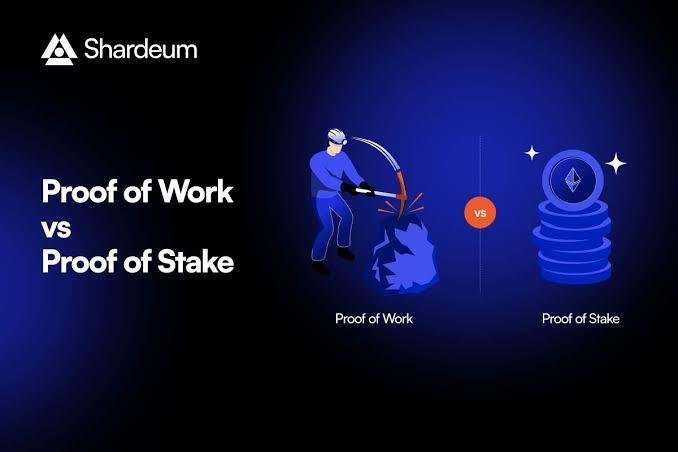
- Bonded Security (PoS): Validators are required to stake tokens (economic collateral). If they act maliciously, their stake is slashed. Axelar is a prime example of this model.
- Bonded vs. Reputation: Wormhole uses a reputation-based system relying on a known set of Guardians.
- Cryptographic Security: The most promising development is the rise of Zero-Knowledge Proofs (ZKPs). ZKPs allow one blockchain to verify a transaction’s validity without needing to trust a third party or wait for finality. This cryptographic proof ensures mathematical finality. The shift toward “intent-based” protocols, where solvers compete to fulfill user requests, also abstracts complexity away from the user, allowing for faster, cheaper, and more secure transfers.
Beyond Bridges: The “Atomic” Future
The end goal is atomic interoperability, where cross-chain actions are executed as a single, indivisible transaction that either succeeds completely or fails gracefully without user friction. Companies like Circle (with its Cross-Chain Transfer Protocol, or CCTP) are spearheading this by standardizing asset transfers for USDC using a “burn-and-mint” model, ensuring native USDC exists across chains without reliance on risky “wrapped” versions. By 2026, Circle is focusing on “faster-than-finality” settlement and multi-asset support, treating the chain as an implementation detail rather than a barrier.
The Future: A Multi-Chain Reality
The trajectory is clear. We are not heading toward a single dominant chain but rather a network of networks.
- Institutional Adoption: For institutions, the question isn’t “which chain should we choose?” but “which network of chains can we plug into?”. Regulation requires compliance and identity management (SSI), which is better handled by specialized chains that can interoperate with public networks for settlement.
- Developer and User Experience: The “winners” of the interoperability race will be protocols that make the cross-chain experience invisible. Wallets are shifting from single-chain tools to multi-chain aggregators, consolidating assets across 100+ blockchains into a single interface.
Prediction: Within the next few years, using a “single-chain wallet” or manually bridging assets will be a niche activity for specialists. The baseline expectation for a Web3 application will be seamless interaction across multiple ecosystems.
The interoperability race isn’t about building one chain to rule them all. It is about building the infrastructure that makes the “chain” irrelevant to the end-user, allowing the digital economy to function as a unified, decentralized whole.
FAQs
1. Is a “multi-chain” future the same as a “cross-chain” future?
No. Multi-chain refers to the existence of many different blockchains and applications deployed on them. Cross-chain refers to the technology that allows these different blockchains to communicate and transfer value. A multi-chain future requires cross-chain solutions to avoid fragmentation.
2. What exactly is a “wrapped token”?
A wrapped token is a digital asset created on one blockchain (like Ethereum) that represents an identical amount of an asset locked on another blockchain (like Bitcoin). For example, “wBTC” is an ERC-20 token on Ethereum that represents 1 BTC locked in a custody account. While useful, they introduce counterparty risk.
3. Why are cross-chain bridges so vulnerable to hacks?
Traditional bridges act as “honeypots” by locking huge amounts of user assets in a single smart contract to mint tokens on the destination chain. If there is a vulnerability in the smart contract code, attackers can drain these pools of value. This has led to billions of dollars in losses in the industry.
4. What is the difference between LayerZero, Axelar, and Wormhole?
These are three major interoperability protocols with different security models:
- LayerZero uses a modular architecture where developers choose the verification network.
- Axelar uses a PoS hub-chain that routes messages like a central router.
- Wormhole uses a network of 19 reputable “Guardians” to sign and relay messages.
5. What is “atomic interoperability”?
Atomic interoperability refers to cross-chain transactions that are executed in a single step without the need for multiple manual actions (like locking funds on one chain and waiting to mint on another). It aims to abstract away the complexity, creating a seamless experience similar to using a single blockchain.