Introduction: The Greatest Wealth Transfer Machine
The cryptocurrency market is often described as the greatest wealth transfer machine in modern financial history. Yet paradoxically, it systematically transfers wealth from the impatient to the patient, from the emotional to the disciplined, and from those who buy at the top to those who sell at the bottom.
The brutal reality is that approximately 99% of retail traders are down on their altcoins, simply waiting to sell at break-even . This isn’t because they lack intelligence or access to information. It’s because they are trapped in a psychological cycle that repeats with clockwork precision every four years.
Understanding this psychology isn’t just an academic exercise—it’s the most critical edge a trader can possess in an environment where sentiment often drives price more than fundamentals. Let’s dissect the emotional machinery of the crypto cycle and build the mental infrastructure needed to break free.
The Anatomy of the Crypto Cycle
The Four-Phase Emotional Cycle
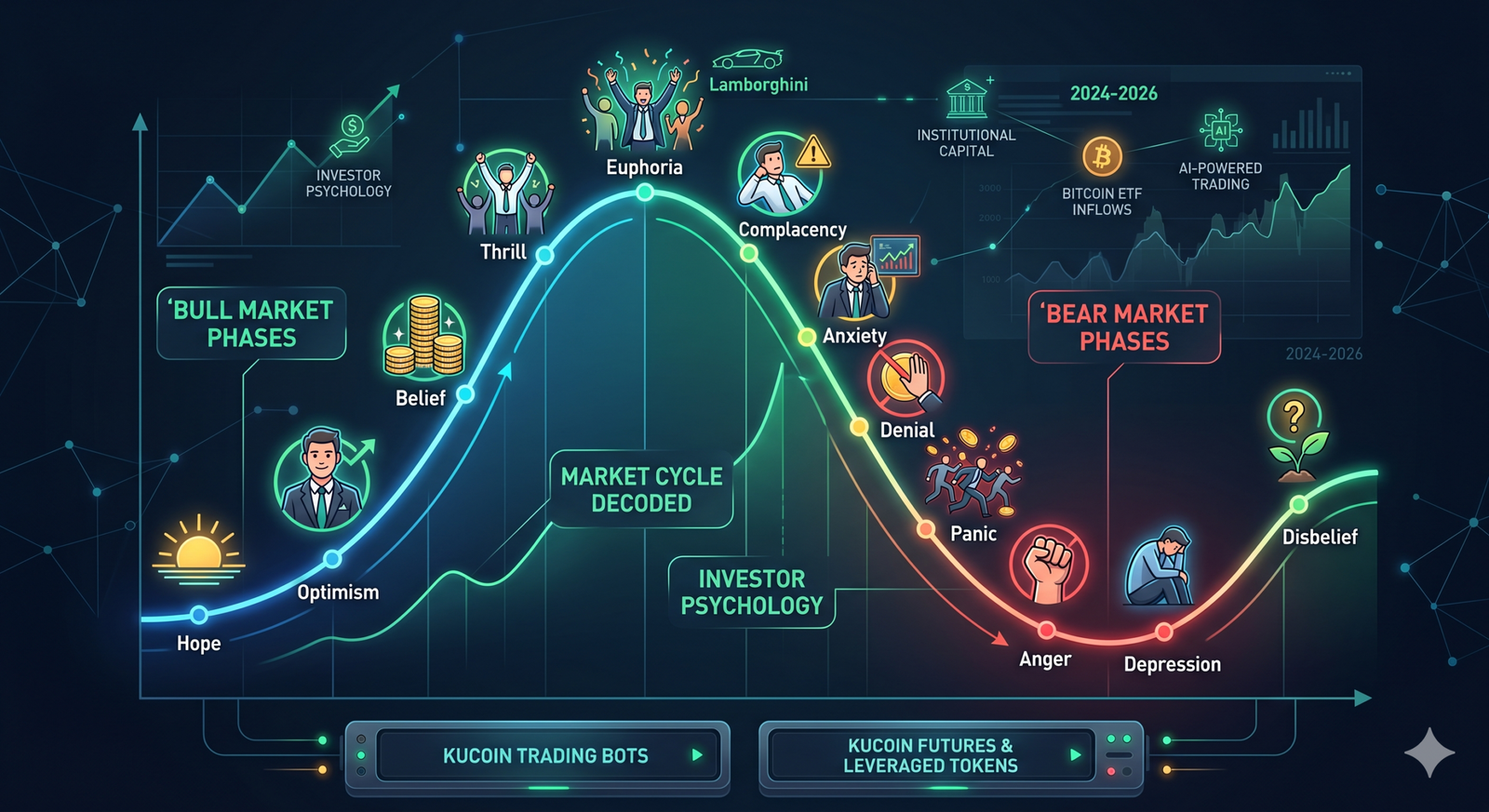
Every major crypto market follows a predictable four-phase pattern that mirrors human psychology more than it reflects technological progress :
Phase 1: Accumulation (Smart Money Entry)
During this phase, the market is quiet. No headlines, no influencers, no hype. Prices have stabilized after a brutal downturn, and sentiment ranges from fear to extreme fear . Smart money—institutions and experienced traders—begin accumulating positions while retail investors remain shell-shocked or completely disengaged. This is when the “Crypto is dead” narratives peak.
Phase 2: Markup (The Awakening)
Prices begin to climb. The trend establishes higher highs and higher lows, volume increases, and confidence slowly returns . Institutional money continues flowing in, but most retail investors remain skeptical, waiting for “confirmation” they’ve already missed .
Phase 3: Distribution (The Retail Trap)
This is where the damage occurs. The breakouts become obvious. Charts display bullish patterns. News turns overwhelmingly positive. Influencers begin talking about the project, and social media floods with price predictions . This is precisely when most retail investors finally enter the market—near the peak.
The demand spikes, FOMO (Fear of Missing Out) takes over, and the question shifts from “Is this project fairly valued?” to “How high can it go?” . Meanwhile, early investors begin distributing their holdings to the eager latecomers.
Phase 4: Markdown (The Panic)
Momentum slows. The first correction arrives, often dismissed as a “healthy pullback.” Many retail investors buy more, convinced it’s a dip. Then token unlocks occur, insider allocations vest, and selling pressure intensifies . Panic sets in. Fear replaces greed. Retail investors who bought at the top now sell near the bottom, completing the cycle.
Why We Buy High and Sell Low: The Psychological Traps
The Neurobiology of FOMO
When a cryptocurrency experiences a sudden price surge, the brain’s amygdala—the center responsible for emotional processing—bypasses the prefrontal cortex, which handles analytical thinking . This “neural protocol” triggers rapid, emotional decision-making rather than measured analysis.
FOMO is particularly potent in crypto because the market operates 24/7, there’s no closing bell to force a pause, and social media amplifies the perception that “everyone else is getting rich” . The dopamine hits from watching prices climb create a gaming-like addiction that overrides rational decision-making.
Loss Aversion and the Disposition Effect
Behavioral economists have established that the pain of losing is approximately twice as powerful as the pleasure of gaining. This “loss aversion” manifests in crypto as holding losing positions far too long, hoping to “get back to even” rather than cutting losses .
This connects to the Disposition Effect: the psychological urge to sell winning positions too early to lock in small gains while holding onto losing positions indefinitely to avoid realizing the loss .
Anchoring Bias: The Price Memory Trap
Anchoring bias occurs when traders fixate on a specific price point—often the All-Time High or their purchase price—and ignore current market data . If you bought Ethereum at $4,000 and it drops to $2,000, your brain subconsciously anchors to $4,000. You might refuse to sell, not because fundamentals justify it, but because you’re waiting to “get back to even” .
This single cognitive bias explains more portfolio destruction than any market crash.
Recency Bias and the Danger of “Good Wins”
Recency bias causes traders to weigh recent events more heavily than historical data . If your last three trades were winners, your brain convinces you the market is “safe,” leading to dangerous over-leveraging.
Perhaps more dangerously, a “Bad Win”—making money by making a poor decision—reinforces terrible habits . If you “ape” into a meme coin without a stop-loss and make $10,000, your journal should label this a “Bad Win” because it rewards behavior that will eventually lead to catastrophic losses.
Breaking the Cycle: Strategies for Psychological Mastery
1. Zero-Base Thinking
The most powerful psychological tool is zero-base thinking: Ask yourself, “If I didn’t own this position today, would I buy it at the current price?” If the answer is no, the only reason you’re still holding is likely anchoring bias .
This simple reframing neutralizes the emotional attachment to “your” coins and forces a rational assessment of current value versus historical cost.
2. Fear and Greed Index as a Contrarian Tool
The Crypto Fear and Greed Index measures market sentiment through five components: volatility (25%), momentum (25%), volume (15%), BTC dominance (15%), and stablecoin dominance (20%) .
The most valuable insight is that extreme greed (75-100) often signals market tops, while extreme fear (0-25) typically indicates bottoms . Professional traders use these extremes as contrarian signals: buying when others are fearful and taking profits when others are greedy.
3. Systematic Trading Tools to Remove Emotion
The most effective way to avoid emotional trading is to remove the human element from execution:
- Dollar-Cost Averaging (DCA): Automated buys at regular intervals regardless of price removes timing bias
- Trading Bots: Grid bots and DCA bots execute based on pre-set parameters, caring only about current logic, not purchase history
- Stop-Loss Orders: Automatically trigger exits at predetermined prices, protecting against panic-driven decisions
4. The Trading Journal: Data-Driven Self-Awareness
A trading journal that tracks both “Hard Metrics” (ROI, drawdown) and “Soft Metrics” (emotional state, impulse levels) is essential for identifying cognitive patterns .
Tag every trade with the bias you felt during the hold. Did you experience the Endowment Effect—overvaluing a coin simply because you own it? Are your largest losses consistently tied to a specific emotional trigger? This data transforms painful losses into proprietary insights.
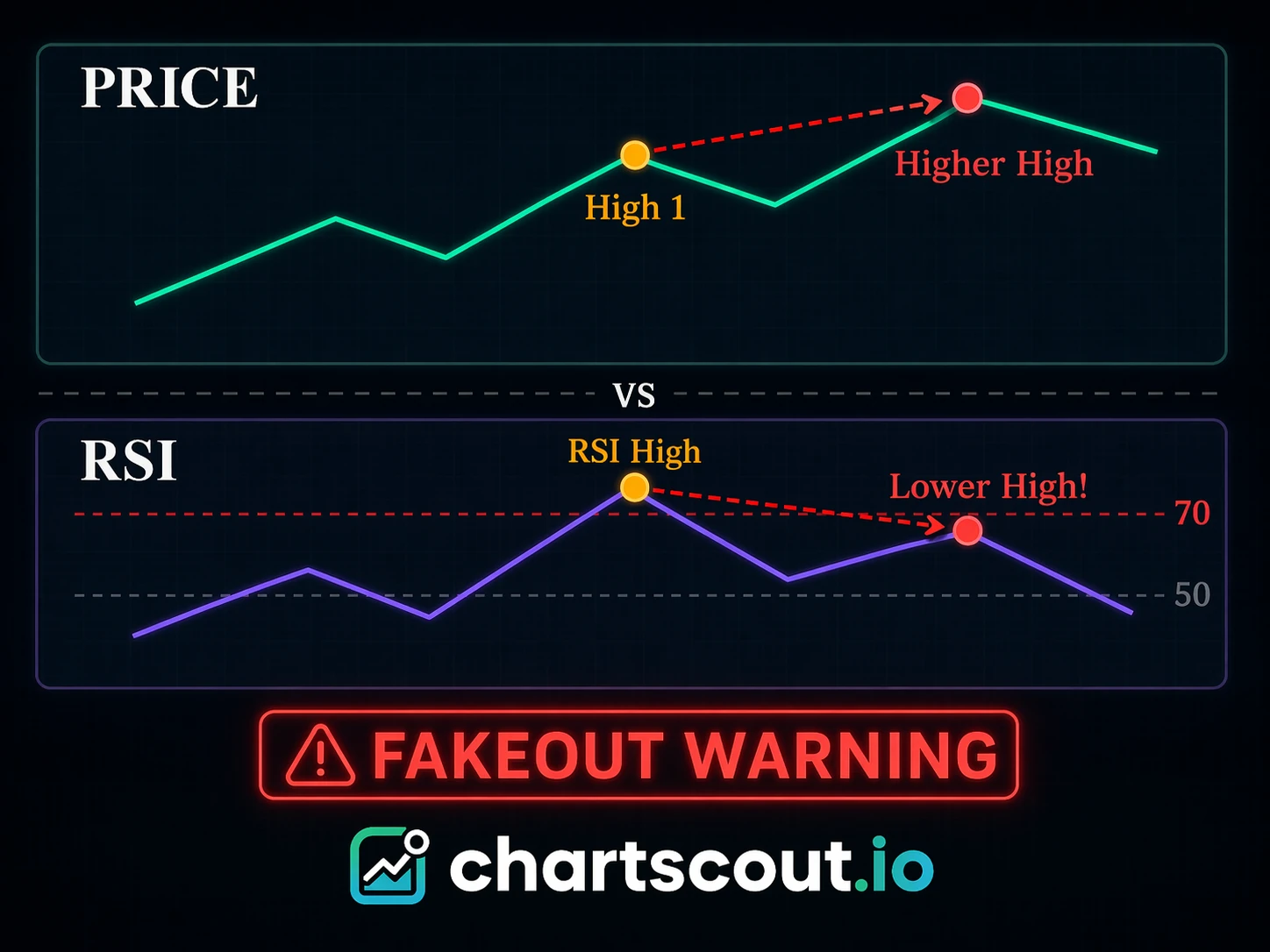
The Impulse Score is particularly valuable: a rating (1-10) of how much a trade was a reaction to a price wick versus a pre-planned setup . If your impulse score is high, wait five minutes before executing—this simple delay often breaks the recency bias loop.
5. Understanding Market Context Before Entering
Before entering any position, ask:
- Who has been accumulating?
- Who holds the majority of supply?
- Are insiders approaching token unlocks?
- Has the project already priced in all good news?
- Am I buying based on research or because everyone is talking about it?
The best opportunities rarely feel comfortable. They typically appear when sentiment is low, attention is elsewhere, and patience is required .
The Professional’s Playbook: Discipline Over Intuition
Professional traders on exchanges like KuCoin and Binance use a systematic approach that bridges “Strategy” and “Execution” :
- Pre-Trade Checklist: Verify emotional state before clicking “Buy”
- Post-Trade Tagging: Label every trade with the bias experienced during the hold
- Monthly Audit: Review performance against broader market events to identify weaknesses
- Process Quality Over Outcome: A “Good Loss” (following all rules but hitting a stop-loss) is more valuable than a “Bad Win” (making money by violating discipline)
When investors pull liquidity during minor price dips out of fear, they miss out on fee accumulation. Rational actors use hedged positions to manage risks and maintain exposure .
Conclusion: The Cycle Will Continue—Your Choice
The four-year crypto cycle doesn’t automatically make people money—it’s precisely why most people stay stuck in losses . The cycle repeats, and accounts reset, not because the market is rigged, but because human psychology is remarkably consistent.
Successful crypto trading isn’t about being right more often. It’s about managing risk, understanding market phase, and maintaining discipline when emotions run high. The market will continue to offer spectacular opportunities—but only for those who have learned to control themselves.
Frequently Asked Questions
Q1: Why do most retail investors consistently buy at the top and sell at the bottom?
Most retail investors enter during the distribution phase when prices have already surged, news is overwhelmingly positive, and social media hype is at its peak . They buy due to FOMO, then panic sell during the markdown phase when fear dominates. This psychological pattern repeats every cycle because the emotional triggers are consistent: greed during rallies, fear during corrections .
Q2: What is the Crypto Fear and Greed Index and how should I use it?
The Fear and Greed Index measures market sentiment through volatility, momentum, volume, BTC dominance, and stablecoin dominance . It’s most valuable as a contrarian indicator: extreme greed (75-100) often signals market tops, while extreme fear (0-25) typically indicates bottoms . When the index shows extreme fear, it may be time to start looking for buy positions; when it shows extreme greed, consider taking profits .
Q3: What is anchoring bias and how does it hurt crypto traders?
Anchoring bias occurs when traders fixate on a specific price point—often their purchase price or an All-Time High—and ignore current market data . If you bought Bitcoin at $70,000 and it drops to $50,000, your brain anchors to $70,000, causing you to hold even when fundamentals suggest further downside. This leads to holding “bags” far too long and missing new entry points because the price doesn’t match the “anchor” .
Q4: How can I avoid FOMO buying during a rally?
The best protection is a pre-defined strategy. Before entering any position, ask yourself key questions: Is this project fairly valued? What is the tokenomics? Are insiders approaching token unlocks? Am I buying based on research or just because everyone is discussing it? Additionally, the impulse score method—rating how much a trade is a reaction versus a pre-planned setup—can help . If your impulse score is high, wait five minutes before executing.
Q5: What is a “bad win” in trading and why is it dangerous?
A “bad win” is making money by violating your trading rules—for example, “aping” into a meme coin without a stop-loss and getting lucky . Bad wins are dangerous because they reinforce poor habits and overconfidence, leading to eventual catastrophic losses. Professional traders label these as bad wins regardless of the financial outcome and focus on “process quality” rather than individual trade results.
Q6: What’s the best strategy to avoid emotional trading?
Systematic approaches are most effective. Dollar-Cost Averaging (DCA) removes timing bias by spreading investments over time . Trading bots execute based on pre-set parameters, ignoring market noise and your emotional state . A trading journal tracking both emotional state and trade outcomes helps identify patterns . The professional’s playbook includes: zero-base thinking, using the Fear and Greed Index as a contrarian signal, and maintaining a systematic approach to risk management.
Q7: How do the four phases of the crypto cycle work?
The four phases are:
- Accumulation: Smart money buys while sentiment is fearful and the market is quiet
- Markup: The trend begins with higher highs and rising volume; confidence returns
- Distribution: Retail investors chase the rally while smart money distributes holdings
- Markdown: Panic selling ensues as retail investors who bought at the top sell near the bottom
The cycle repeats approximately every four years, and understanding which phase you’re in is more valuable than any technical indicator.
Q8: Can professional traders completely eliminate emotional trading?
Professional traders cannot eliminate emotion, but they can neutralize its impact through systematic frameworks. They use pre-trade checklists, post-trade tagging of emotional states, regular audits, and automation where possible . The goal isn’t to become emotionless—it’s to create systems that execute despite emotional states. Successful neutralization shifts strategy from emotional reaction to logical execution .