
The allure of the crypto futures market is undeniable. The ability to control a massive position with a fraction of the capital—often amplified by 100x leverage or more—can turn a small price movement into a life-changing profit. However, this same power is a double-edged sword. The statistics are brutal and consistent: the vast majority of retail traders lose money in these markets. Studies from various financial authorities, including the Securities and Exchange Board of India (SEBI), have shown that approximately 93% of individual traders in the equity futures and options segment incur substantial losses.
This pattern is mirrored in the crypto perpetual futures market, where reports indicate that between 70% and 97% of day traders lose money over time. It’s not a matter of bad luck; it’s a function of poor risk management, emotional decision-making, and a fundamental misunderstanding of leverage and liquidation.
This article explores the primary reasons why so many traders are liquidated and outlines a survival strategy based on discipline, mathematics, and a “capital preservation first” mindset.
The Anatomy of a Liquidation: How Leverage Works Against You
Leverage allows you to borrow funds from an exchange to increase your position size. For example, with $100 and 10x leverage, you can control a $1,000 position. While this magnifies potential profits, it also magnifies losses by the same multiplier. The liquidation price is the point at which your losses have depleted your initial margin (your collateral) to a level where the exchange will automatically close your position to prevent further losses.
Here is a clear breakdown of how leverage directly correlates to risk tolerance:
| Leverage Multiplier | Allowed Volatility Range Before Liquidation | Liquidation Probability (High Volatility) |
|---|---|---|
| 5x | ~20% | Low |
| 10x | ~10% | Medium |
| 50x | ~2% | Extremely High |

This data highlights the “High Leverage, Quick Death” scenario . Using 50x or 100x leverage means a mere 1-2% market wiggle in the opposite direction can completely wipe out a position.
Why 90% of Traders Fail: The Core Mistakes
The failure rate is so high not just because the market is volatile, but because traders repeat the same predictable mistakes. These are the three main reasons for failure:
1. Reckless Position Sizing (Trading with “House Money”)
A common mistake is treating the exchange like a casino and going “all-in” on a single trade . The core issue is overexposure, not just the leverage multiplier. A trader using 20x leverage on 5% of their capital is much safer than a trader using 5x leverage on 50% of their capital . A 10% market reversal will liquidate the latter just as easily.
2. Ignoring or Misusing Stop-Loss Orders
Many beginners trust their “liquidation price” as their stop-loss. This is a critical error. The liquidation price is the abyss—you should never get there. Experienced traders set fixed stop-losses immediately upon entering a position (e.g., 3-5% loss) to prevent a small loss from becoming a total account wipeout .
3. The “Just Wait” Mentality (Emotional Trading)
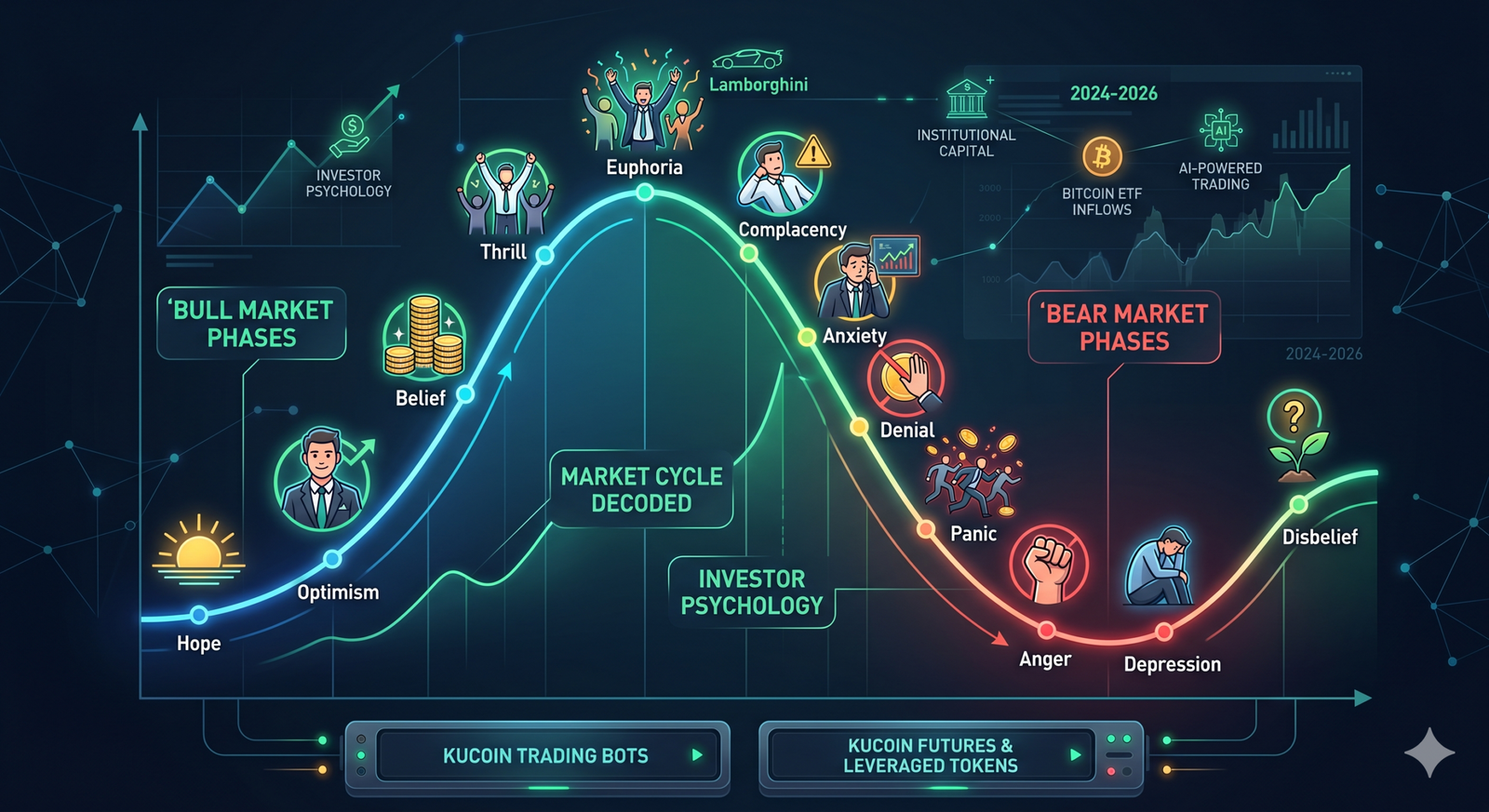
This is the classic psychological trap. When a trade goes red, novice traders freeze, hoping the market will bounce back and refusing to cut their losses. “Just wait a bit, it’ll bounce back!” is a dangerous refrain that often leads to a deeper drop and eventual liquidation . This is compounded by Fear of Missing Out (FOMO) or panic selling, which often leads to buying high and selling low .
The Survival Strategy: Building Three Firewalls
Surviving in the futures market requires a disciplined strategy that prioritizes capital preservation above all else. As a saying in the futures market goes: “Bulls and bears can make money, but pigs get slaughtered” . Here is a three-step firewall to avoid becoming the “pig.”
Firewall 1: Master Position Sizing
Adopt a strict “Fixed Fractional Risk” model. This means calculating your position size based on your total capital and the distance to your stop-loss.
- The 2% Rule: A widely accepted professional standard is to risk only 1-2% of your total account balance on a single trade .
- The Formula: This ensures that even a string of losses won’t significantly dent your capital. For example, if you have $10,000 and risk 2%, your maximum loss on a trade is $200.
Firewall 2: The Strict Stop-Loss
Never enter a trade without a pre-determined stop-loss order. This is the point where you are proven wrong, and you must exit without hesitation. Your stop-loss should be based on technical levels (e.g., support/resistance, Average True Range (ATR)) and must align with your position sizing rule .
Firewall 3: The Habitual Withdrawal (Lock in Profits)
The money in your exchange wallet is not yours until it is withdrawn. Implement a rule to withdraw a portion of your profits (e.g., 50%) after every successful trade . This removes the temptation to gamble away your winnings and ensures you are consistently taking value out of the market.
Smart Risk Tools: Isolated Margin and Dynamic Position Sizing
Beyond the three firewalls, there are two technical tools essential for survival:
- Isolated Margin vs. Cross Margin: In Cross Margin mode, your entire futures wallet balance is used as collateral for all open positions. If one trade goes bad, it can drain your funds and liquidate other positions . Isolated Margin allows you to allocate a specific amount of margin to a single position, limiting your loss to that specific allocation. Newbies should always use Isolated Margin.
- DCA (Dollar-Cost Averaging) with Caution: Some experienced traders use a DCA strategy to lower their average entry price on a winning asset. However, this must be done carefully by adding small amounts (e.g., 1% of wallet) at key support levels and withdrawing the added margin when the price bounces back to breakeven. Without a plan, DCA can quickly become a “martingale” strategy that risks a massive position in a downtrend.
Conclusion
Futures trading is a zero-sum game where the exchange and sophisticated market participants often profit from the mistakes of retail traders. The 90% failure rate is not a myth; it is a statistical reality born from reckless risk-taking. To become the exception, you must adopt a professional mindset.
Survival is not about being right all the time; it is about ensuring that you are wrong small and right big. Master your risk first—profits will follow.
FAQ
Is it true that 90% of futures traders lose money?
While the exact percentage varies, studies from financial authorities like SEBI have shown that upwards of 93% of individual traders in equity derivatives incur losses. This is a common industry standard across futures and options trading, highlighting the extreme difficulty of consistently profiting.
What exactly causes a liquidation in futures trading?
Liquidation occurs when your position’s losses deplete your initial margin (collateral) below the maintenance margin requirement. When this happens, the exchange automatically closes your position to prevent further losses. This is triggered when the market moves against you to your liquidation price.
What is the difference between Isolated Margin and Cross Margin?
Isolated Margin limits the risk of a single trade to only the margin allocated to that specific position. Cross Margin uses your entire futures wallet balance as collateral for all open positions, meaning a losing trade can drain your entire wallet and cause other positions to be liquidated. Isolated margin is recommended for new traders.
How can I calculate my liquidation price?
A simplified formula is:
Liquidation Price Movement = Entry Price ÷ Leverage
- Long Liquidation Price = Entry Price – Liquidation Price Movement
- Short Liquidation Price = Entry Price + Liquidation Price Movement
What is the safest leverage to use for futures trading?
Experts recommend that beginners use lower leverage, typically in the 5x to 10x range. More importantly, you should calculate your position size to ensure you are only risking a small percentage (1-2%) of your total capital, regardless of the leverage multiplier. Leverage is a tool to control position size, not a target to maximize.